
No one chooses to be bitter. No one wants to feel broken.
These states are responses — not identities.
And when we understand the depth beneath the surface, we stop asking people to “get over it” and start asking how we can help them feel safe again.
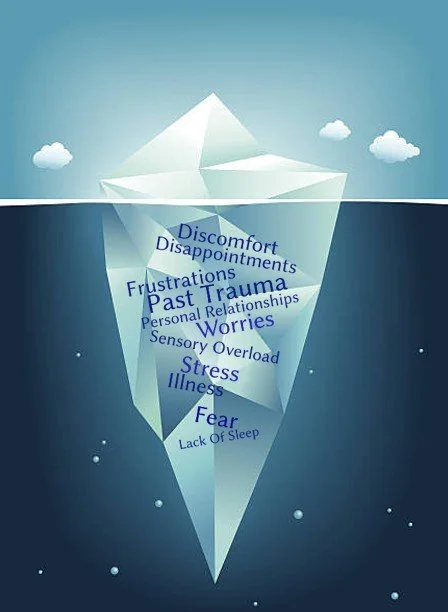
We often meet people at the surface of their behaviour, not at the depth of their experience. Someone appears bitter, sharp, or closed off, and it’s tempting to judge and/or label them as difficult. Someone else seems sad, withdrawn, or fragile, and it’s easy to assume they’re simply not coping. But these visible emotions are only the tip of the iceberg — the part we can see.
Some people wear their pain on the surface. Others carry it deep below the waterline. And just like an iceberg, what we see in someone’s behaviour is often only a fraction of what sits beneath.
When a colleague becomes short, withdrawn, reactive, or unusually quiet, it’s easy to focus on the behaviour. It’s even easier to judge it.
But surface emotions — bitterness or sadness — are rarely the starting point. They’re the outcome.
They’re the part of the iceberg we can see.
Everything else is submerged.
Below the surface sit the pressures, histories, and private battles that our colleagues rarely talk about:
Personal relationships
Past experiences and trauma
Unresolved conflict
Sensory overload
Illness and/or exhaustion
Sometimes the person who seems the hardest to approach is the one who is hurting the most. Bitterness can look like anger, defensiveness, or a refusal to let things go — but often it’s not anger at all. It’s sadness that has nowhere else to go. It’s the emotional armour someone puts on when they feel too fragile to be seen as they really are.
People rarely become unforgiving because they enjoy holding onto resentment. More often, they’ve been carrying disappointment, stress, fear, or past hurt for so long that bitterness becomes a kind of shield. It’s easier to appear tough than to admit you feel broken. It’s easier to push people away than to risk being hurt again.
Sadness sits quietly beneath the surface, it’s the quiet collapse that happens when someone has been holding too much for too long. It shows up in silence, in withdrawal, in the person who stops contributing because they no longer believe their voice matters. Beneath that sadness may sit stress, worries, illness, sensory overload, or the exhaustion that comes from too many sleepless nights. Sadness isn’t weakness. It’s the emotional imprint of carrying a load that no one else can see.
Bitterness is rarely about hostility. It’s a form of protection. Bitterness grows from disappointments that were never acknowledged, frustrations that piled up, past trauma that was never understood, and fear that has been quietly carried for too long. It’s a shield, not a flaw — a way of saying, I’ve been hurt before, and I won’t let it happen again.
When we understand this, we stop taking the surface behaviour at face value. We start to see the human being beneath it — the one who is tired, overwhelmed, or quietly hurting. And instead of asking, Why are they acting like this? we begin to wonder, What pain might they be carrying? What sadness might be shaping this reaction?
People don’t become bitter without a story. They don’t become unforgiving without a reason. And sometimes the most compassionate thing we can do is to look beyond the sharpness and recognise the sadness beneath it — the part that is not angry at all, just broken, tired, and trying to survive the only way it knows how.
Repair won’t come from telling someone to “move on” or “be professional.” It comes from creating conditions where they no longer need to armour up or shut down. It comes from listening without defensiveness, acknowledging harm even when it wasn’t intentional, restoring trust through consistent action, and building accountability so people know their concerns won’t be dismissed. When workplaces do this well, bitterness softens. Sadness lifts. People begin to rise again.
Before you’re tempted to judge a behaviour — be curious about what might be below the surface — there is always more.
Everyone is entitled to an inclusive, safe, and respectful workplace
Respect at Work facilitates discussions about respect, respectful communication, and respectful behaviours - have look here at some of the training options we offer.